Sofia decides to join the Paris tour
A Gentleman in MoscowSofia’s decision to join the Conservatory’s Paris tour turns on a distinction between fear and attachment. She has declined the invitation, not because she doubts her ability or is overcome by anxiety, but because she likes her life at the hotel with her father. Count Alexander Ilyich Rostov answers that reluctance not with a demand or a promise of applause, but with memories of Nina and an argument for departure: a life sheltered within the Metropol cannot substitute for venturing into the world beyond it.
The invitation and its deadline
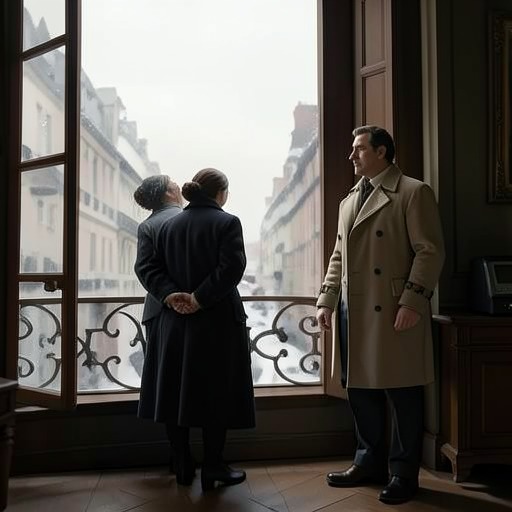
At first, the Count does not know that Sofia has declined the invitation. Director Vavilov has informed Viktor, who asks whether the Count instructed her to withdraw her name. The Count is genuinely surprised and insists that he had no idea; indeed, he agrees that Sofia’s future depends on performing with the orchestra. The misunderstanding matters because her choice is not the result of a paternal prohibition. Viktor had worried that the Count might have made the decision for her, but the exchange establishes that Sofia has acted on her own.
There is almost no time to resolve the matter. The orchestra’s itinerary and musical program are due to be announced publicly on Friday, and Director Vavilov needs the performers in place beforehand. Viktor has secured only a twenty-four-hour delay before a replacement is appointed. If the Count caused the withdrawal, Viktor says, he must undo it; if Sofia made the choice herself, the Count must speak with her that night. His urgency gives the conversation a practical deadline, but it also sharpens its personal stakes: Sofia must decide whether to defend her own talent by accepting an opportunity that she does not want for its own sake.
What Sofia says she wants
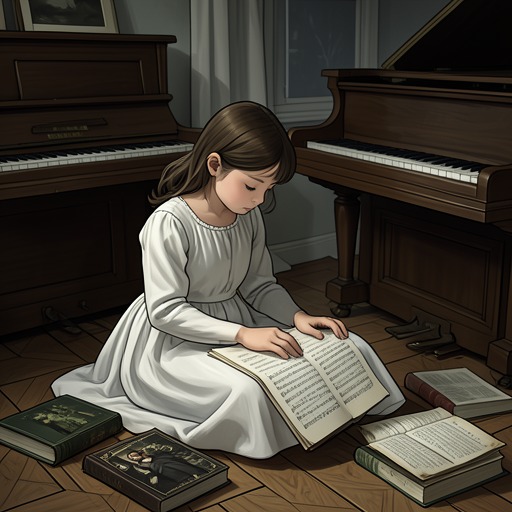
The Count meets Sofia at table ten in the Boyarsky Restaurant. He had prepared a promising category for their game of Zut, common uses for wax, but sets it aside and begins instead to summon a story from his past. Before that story can address her decision, Sofia makes the central point plainly: anxiety has nothing to do with it; she simply does not want to go. When the Count asks why, she looks down at the table and moves her own silver before explaining that she likes it there, with him.
Her answer changes the problem the Count must solve. Persuading her that she is brave enough to perform would miss the point; so would treating her refusal as ordinary stage fright. The obstacle is the life she values at the Metropol and the closeness that life gives her to her father. The Count studies her serenity, which he contrasts with the impetuousness he associates with youth, but he does not use that contrast to dismiss her preference. Instead, he searches for a way to make the choice larger than a contest between staying with him and leaving him.
Nina’s example and the case for departure
The Count recalls a Christmas he spent with Sofia’s mother at the Piazza in 1922. He tells Sofia about Nina’s ice-cream hors d’oeuvre, her reluctance to sit in scholarly rows, and her argument that broadening one’s horizons requires venturing beyond them. The memory supplies a precedent within Sofia’s own family: her mother’s appetite for the world was expressed not as an abstract principle but as a refusal to let familiar surroundings define the limits of experience.
The Count then turns that memory against his own past behavior. He admits that he and the hotel’s close circle—Marina, Andrey, and Emile—have helped make the hotel seem as wide and wonderful as the world, so that Sofia would choose to spend more time there with them. He calls this a disservice. A gilded hall where she can hear Scheherazade, or a den where she can read the Odyssey, may offer art and imagination, but neither is the same as setting forth into the unknown. His examples, Marco Polo traveling to China and Columbus to America, make the distinction concrete: encountering the world cannot be replaced by experiencing it at second hand within the hotel.
Acceptance and the meaning of acclaim
The Count also revises what he means when he says he is proud of Sofia. He recalls the Conservatory competition, which she won, but says that the moment he felt the greatest pride was not when she and Anna returned with news of the victory. It was earlier, when he watched Sofia leave the hotel for the hall. In this telling, the meaningful act came before the result: going out despite uncertainty mattered more than receiving applause.
Sofia’s answer makes her decision legible without turning it into a rejection of the bond that made her hesitate. She says that if she is to play the piano in Paris, she wishes her father could be in the audience. The Count replies that even if she played on the moon, he would hear every chord. He cannot promise to be physically present, but his assurance offers a different form of accompaniment. The tour is no longer framed as choosing Paris over her father; it becomes an act of departure that their affection can survive. Her conditional wish, following his appeal and her recognition of what leaving means, marks her acceptance of the invitation.
The scene therefore places the uncertainty of acclaim beside a more intimate uncertainty: whether love can permit distance without becoming abandonment. The Count’s answer does not diminish Sofia’s attachment to the hotel. Rather, he acknowledges his part in making that attachment a boundary and asks her to venture beyond it. Her decision joins artistic opportunity to an act of self-directed departure, while his imagined listening carries their connection beyond the walls that have defined their shared life.